


Code, Coffee & Culture: Meine ersten 2 Wochen als Digital Nomad in Chiang Mai 🇹🇭💻
Two weeks in Chiang Mai are in the books, and what can I say? I’ve fallen head over heels for this city. Sure, that might be because I had only seen Bangkok before, but even after visiting Koh Samui, Koh Phangan, and Koh Tao, one thing is clear: if you want to work as a digital nomad in Chiang Mai, you’ll find one of the most livable cities on the planet. Here are my honest thoughts after 14 days.
All spots at a glance: Don’t feel like Googling addresses forever? I’ve gathered all my personal highlights from this post into one interactive map for you.
👉 Click here fore my Chiang Mai Map
💸 Budget: How cheap is it really?
🛏️ Accommodation
Let’s talk numbers. I traveled to Chiang Mai with two friends, which obviously cut down accommodation costs significantly. We stayed in three different places, mostly because we spontaneously decided to extend our stay.
- Accommodation 1: An apartment complex with a rooftop gym and pool. Mega cool hotel with a killer view. The gym wasn’t top-tier, and I personally missed having a calisthenics tower. (My cost: approx. €137 for 7 nights)
- Accommodation 2: Less luxury, but located right in the heart of Nimman—the ultimate digital nomad district. It’s packed with laptop-friendly cafes and coworking spaces. I absolutely love this area! (My cost: approx. €57 for 3 nights)
- Accommodation 3: A low-budget hotel (My cost: €39 for 3 nights), because we couldn’t find anything else on short notice.
My total accommodation budget ended up being around €233 for 2 weeks.
🛵 Transport: Getting from A to B
The best way to get around Chiang Mai is Grab. You often pay just a few cents for short trips. If you feel confident on two wheels, renting your own scooter gives you even more flexibility.
For typical tourist spots outside the city, group tours are a solid option. You buy tickets online, get picked up at a meeting point, and dropped off later. But here’s a pro tip: Rent a car for a day! We did that, and it turned into an epic road trip (more on that below).
- Grab Bike: approx. €0.80 per ride
- Car Rental: €72 per day
🍜 Food & Night Markets
Thailand, and Chiang Mai in particular, is incredibly affordable. However, there are “expensive” spots too. Of course, they don’t compare to German prices, but if you’re not careful, it adds up.
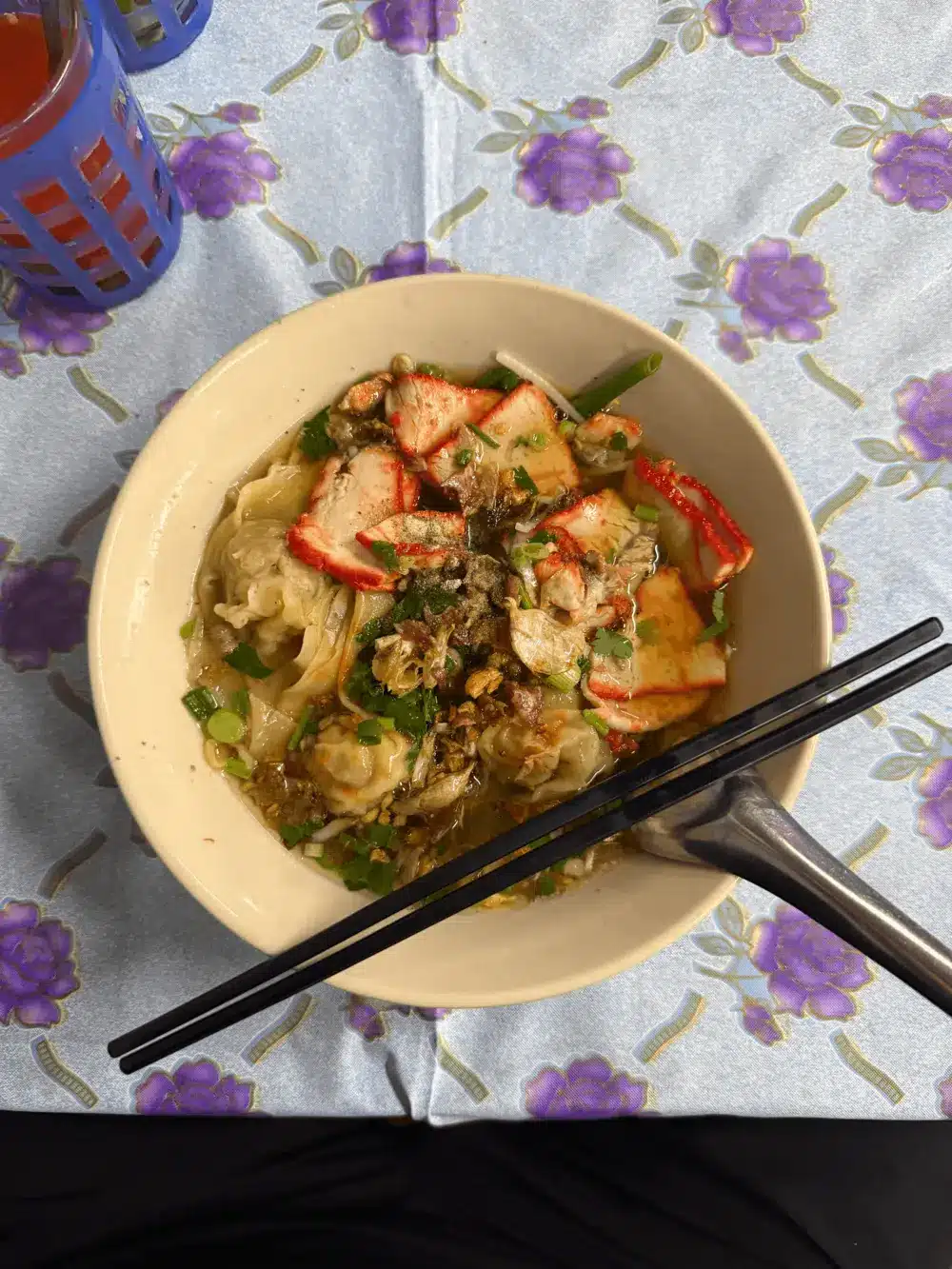
Many people are hesitant to try street food from local stalls. But do it! You’ll have the best food of your life. I visited my “Soup Lady“ several times; she made me the best noodle soup for just 50 Baht (€1.36). There are so many local restaurants run with so much heart. As a German, you might not be used to this level of friendliness and warmth. Consider yourself warned!
I highly recommend the night markets scattered across the city. My favorite is the Kalare Night Market in the eastern part of Chiang Mai. The vibe there was the best—live music every night and endless stalls where you can find everything:
- Mango Sticky Rice: approx. 100 Baht (€2.73)
- Skewers: approx. 25 Baht (€0.68 — these were my absolute favorite!)
- Pad Thai: approx. 100 Baht (€2.73)
- Coconut Ice Cream: approx. 80 Baht (€2.18)
- Noodle Soup: 50 Baht (€1.36)
☕️ Coffee Culture & Laptop Work
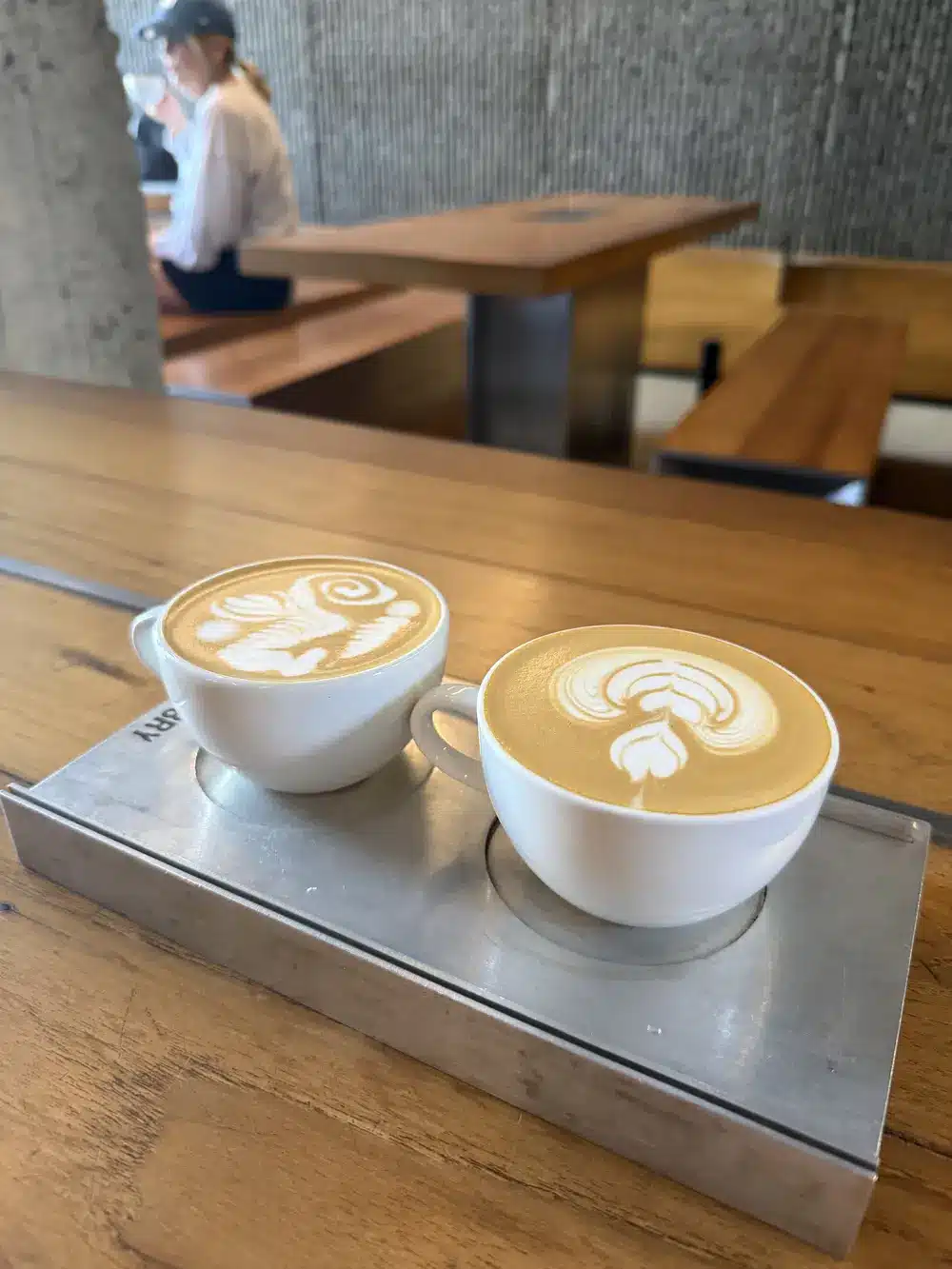
II’m usually not a “black coffee” kind of guy; I prefer coffee-mix drinks like Caramel Macchiatos, Matcha Lattes, etc. But my barista buddy who was with me was flipping out over the sheer number of high-quality cafes here. And I see it too: the quality provided here is breathtaking. I could hardly believe it: when the coffee is good and the baristas know their craft, I actually enjoy pure coffee.
I loved walking through the city, scouting cafes for Twork, and getting some deep work done.
💻 Want to know which cafes are best for working? Check out my Work Cafe Chiang Mai Guide.
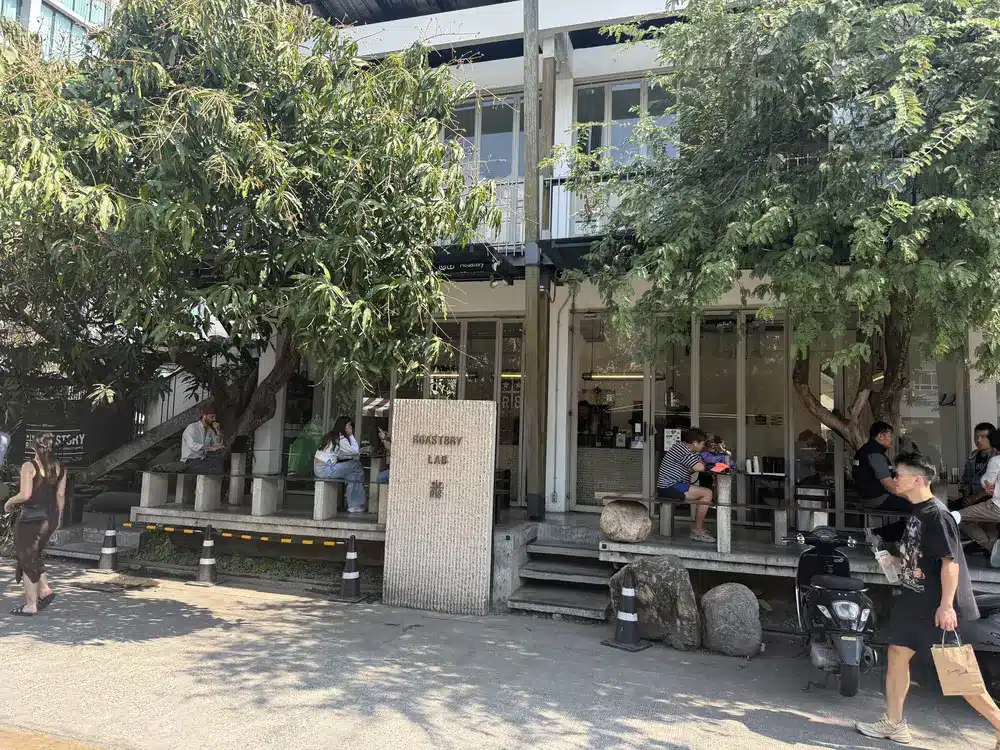
🗺️ The Best Areas in Chiang Mai
For me, it’s usually enough to just wander through the city and check out whatever looks interesting—usually cafes, temples, or large plazas.
- Nimman: The more Western-influenced part of Chiang Mai. Tons of cafes, coworking spaces, boutique shops, and a massive digital nomad community. It’s a bit pricier here.
- The Old City: Surrounded by a historic moat and remnants of the city walls. The walls alone are worth a look. The city center itself is full of narrow alleys and temples. It’s worth a stroll, even if prices are often a bit higher. There’s a night market on the southern edge, though I wasn’t the biggest fan of that one.
- East & Southeast: The area east of the city walls is the most well-preserved. There’s a large plaza for events and concerts. Even beyond the walls in the (south)east, there are plenty of cafes and local street food. This is also where you’ll find my favorite night market (Kalare).
🌿 Exploring the Surroundings (Road Trip!)
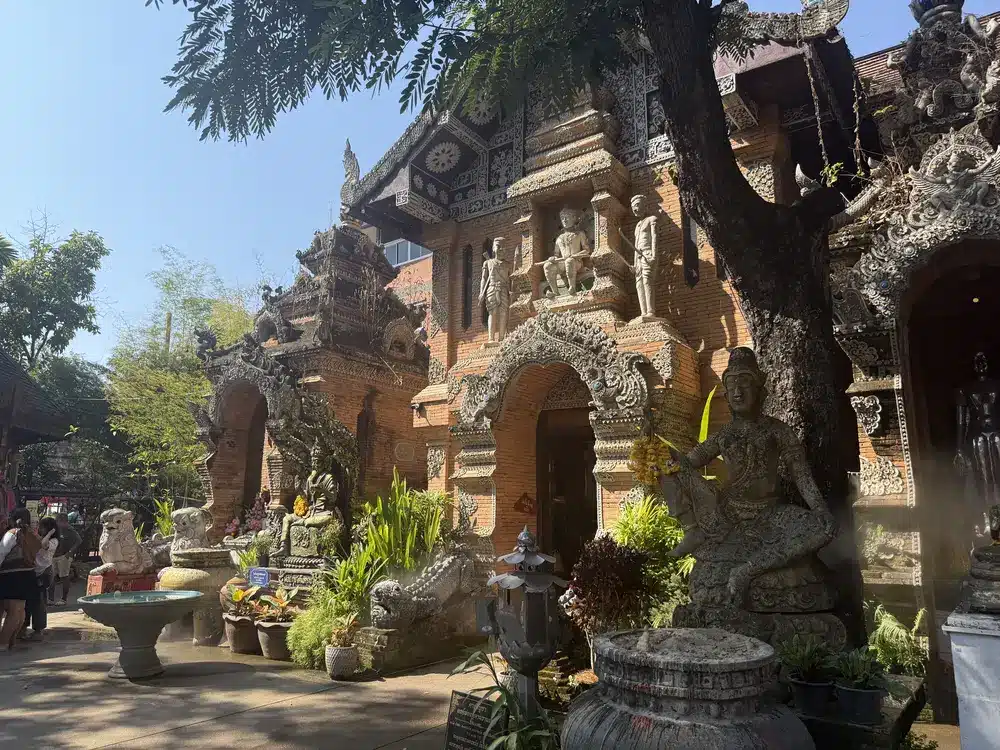
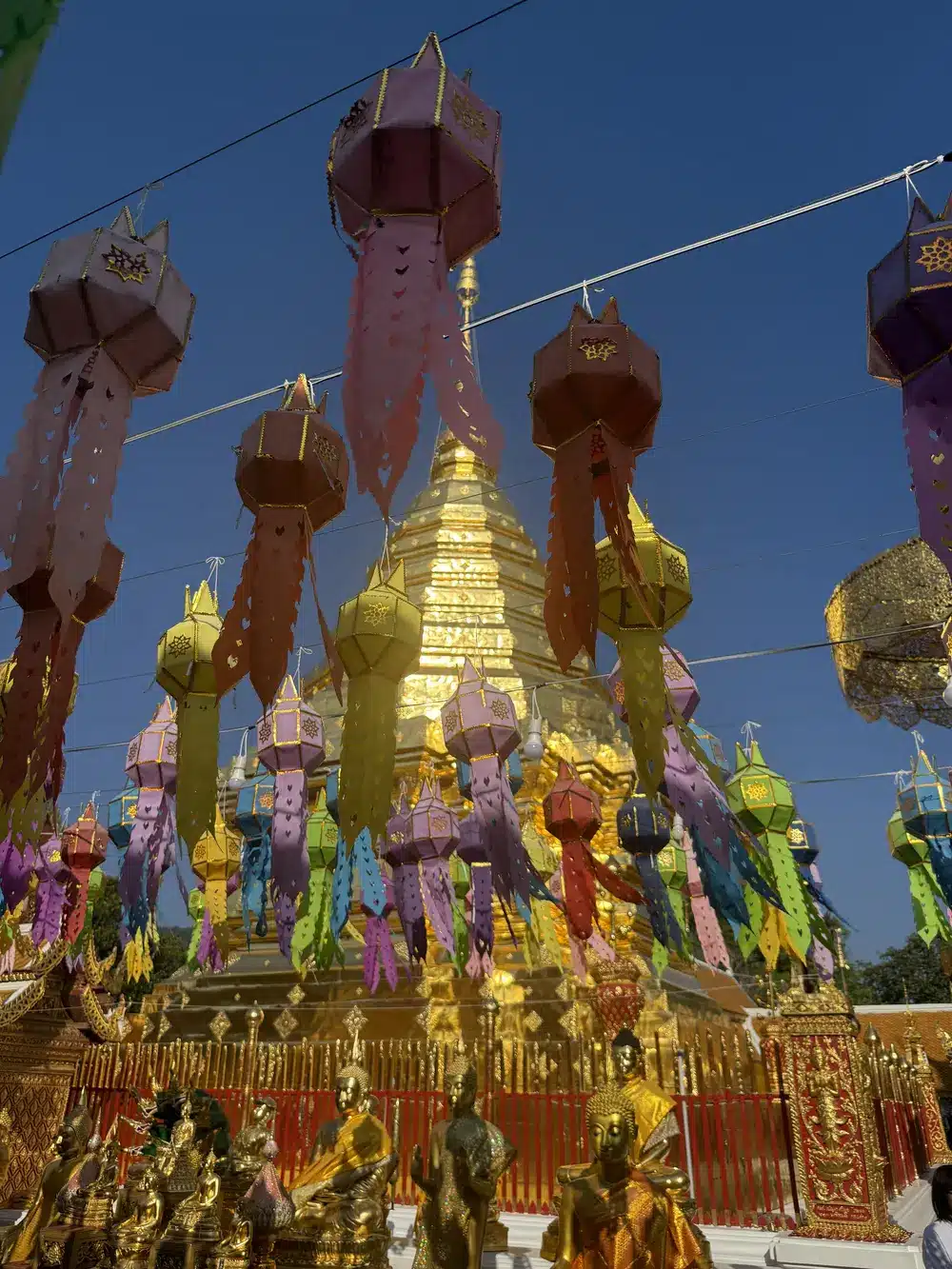
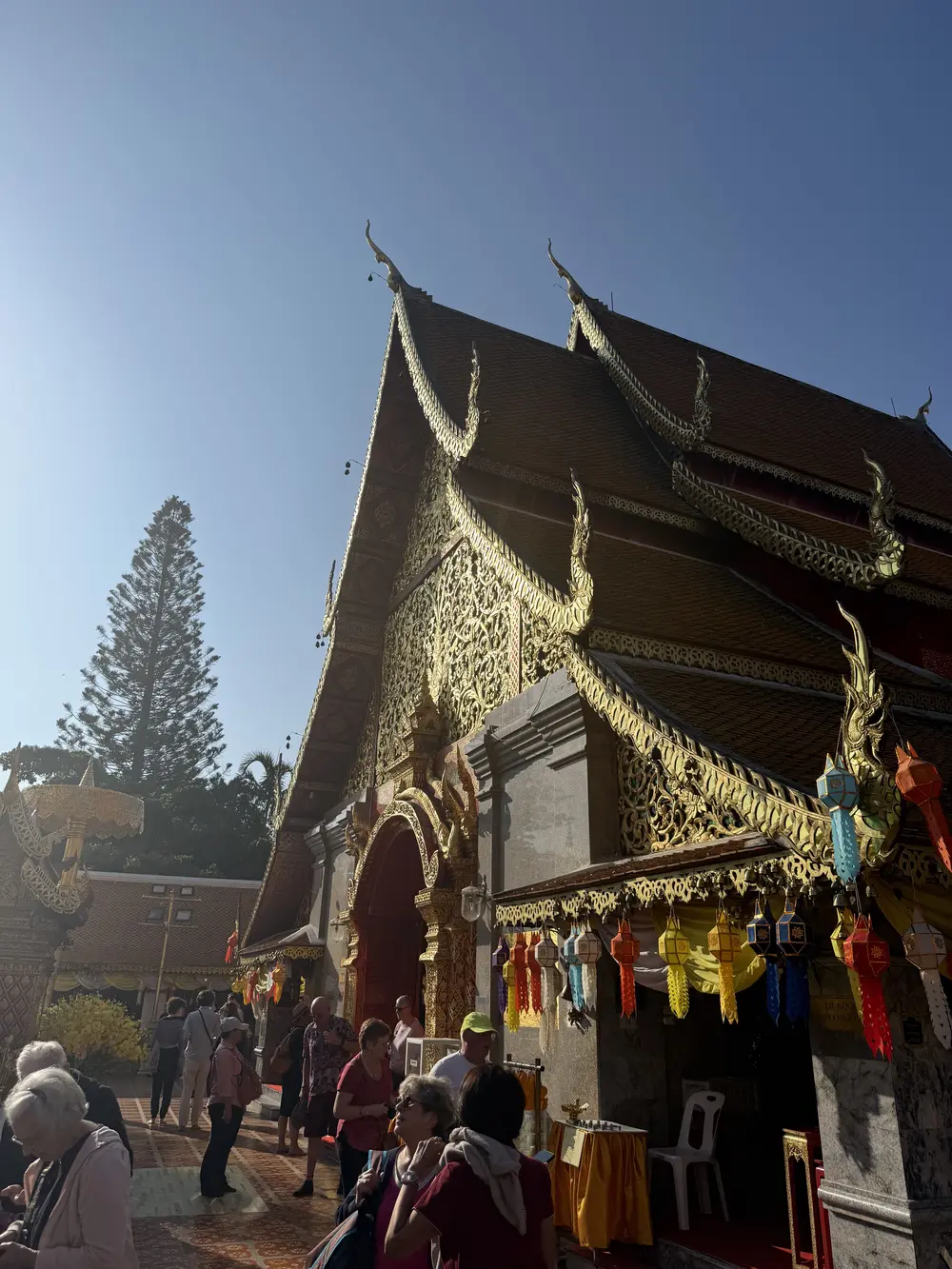
Rent a car for the outskirts—it’s worth it. First, we visited Wat Phra That Doi Suthep, a beautiful temple with a magnificent view over Chiang Mai.
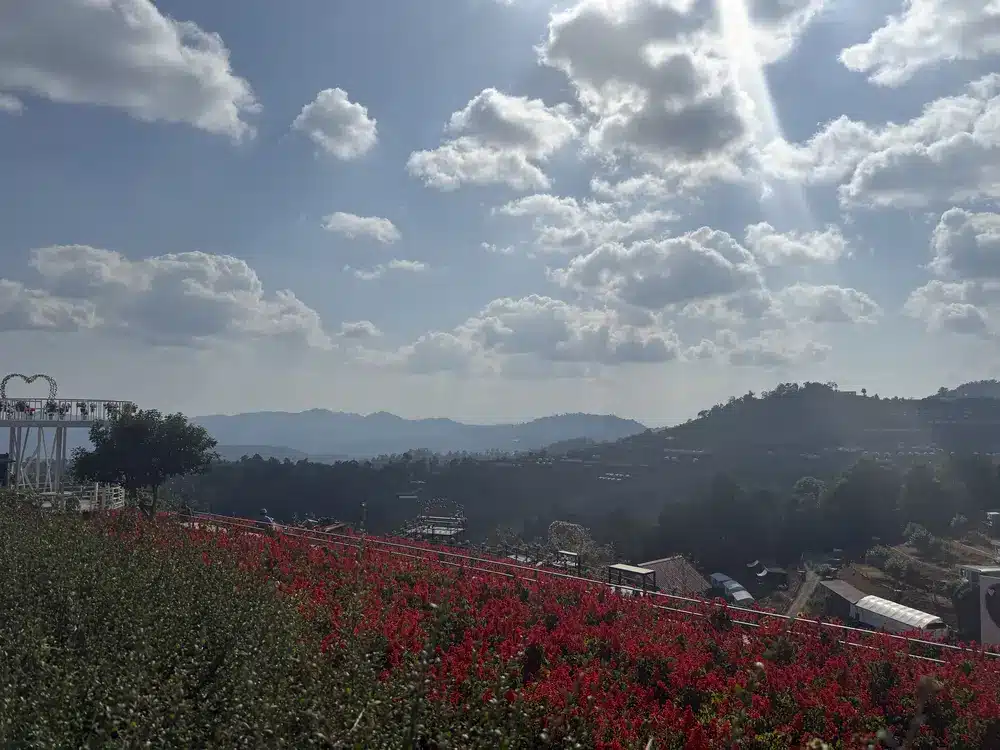
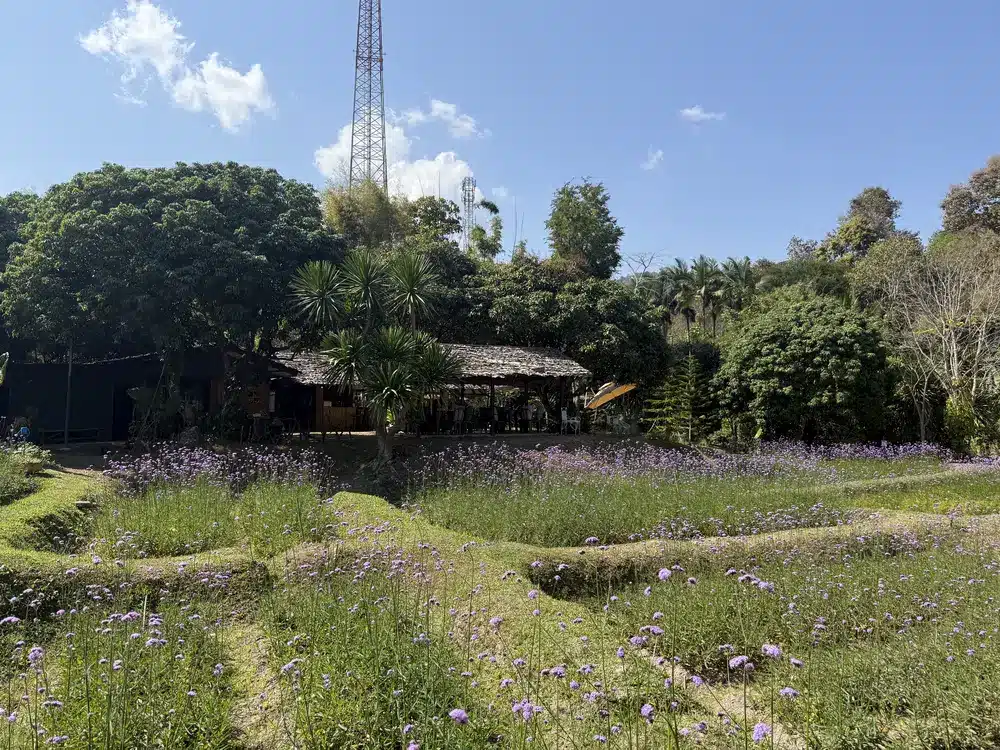
Then we headed to the Mae Sa Waterfall. You can hike up to the source and even swim in some parts. We weren’t there during the rainy season, so there wasn’t much swimming involved. Around lunchtime, we spotted an inconspicuous sign by the road and found one of the most beautiful, peaceful restaurants ever. Run by a family in the middle of a flower field, we were the only guests there.
We spent quite a while there before driving toward Mon Jam. That was a short visit, though, as almost every cafe and field worker there charged an entrance fee. On another day, we took a tour bus to the Sticky Waterfalls. I highly recommend those as well!

🏁 Conclusion: Is Chiang Mai worth it for Digital Nomads?
Absolutely. Chiang Mai delivers exactly what you imagine the ideal remote work life to be: excellent (and cheap!) food, a welcoming culture, a huge community, and fantastic coffee.
As a developer, I spend a lot of time at my computer, and the city provides the perfect infrastructure for that. But that’s also where the challenge lies: finding the right spot to code among all these cool locations—somewhere with a good chair, power outlets, and strong Wi-Fi—can be a hassle. It only showed me that an app like Twork is worth its weight in gold here.
Chiang Mai, I’ll definitely be back.
👉 Want to know where to be most productive? Read more here: The Best Workspaces in Chiang Mai.
🗺️ My Chiang Mai Hotspots at a Glance
know how annoying it is to manually hunt down addresses from various blogs. That’s why I’ve marked all my favorites—from the €1.50 Soup Lady to the perfect work cafe—on this interactive map. Feel free to share the map with other nomads or embed it directly on your own website. Sharing is caring!